WELCOME TO FOUR ON THE FOUR: A BLOG ABOUT JAZZ DRUMMING AND ALL THINGS UNRELATED, BROUGHT TO YOU BY JON McCASLIN

Thursday, February 5, 2015

Gerry Shatford - "When I Sat Down to Play the Piano"


Today's post features a Q&A interview with my friend and pianist Gerry Shatford, from Toronto. Gerry recently released a very fine piano trio album with Terry Clarke (drums) and Neil Swainson (bass) featuring his original music influenced by the poetry of Al Purdy.

I first met Gerry in 2002 and played frequently with him and bassist Joel Prenovault at the Cafe Paradiso in Ottawa (now another long-gone, defunct jazz establishment!) 

I was really impressed with not only his playing but the depth of his knowledge about the history of jazz piano and of its innovators. He's really done his homework over the years and transcribed a ridiculous amount of music. Naturally, I wasn't surprised to see the depth of his answers when I sent him some questions about his music. 

Check out this CD, it's really great! 
http://www.cdbaby.com/cd/gerryshatford
(okay, I admit I am a bit biased since I'm a big fan of Terry Clarke's drumming too!)


1) What can you tell us about your musical background? How did you learn to play Jazz? 

Seriously studying music, and jazz piano in particular, didn’t begin for me until I had enrolled at McGill University, originally as a composition major with my practical instrumental instruction being classical piano. At that time students could enroll in some of the jazz courses even if they weren’t jazz majors, so I took advantage of “Combo Seminar” and “Jazz Materials” to broaden my range of influences as a composer. I also took private lessons with Art Roberts at his home in N.D.G. It was during this period that I heard a Sonny Stitt recording of “All God’s Chillun Got Rhythm” with Bud Powell on piano, in a jazz history course being taught by Fred Henke; this was one of those “Holy Shit!” moments.  Shortly thereafter I auditioned for the jazz programme at McGill, and had a dual and then triple major (composition, classical performance, jazz performance) until it all became too much and I let go of the classical thing.

McGill was a great place to be at that time (late 80’s/early 90’s) as my cohort was extremely strong, and there were so many great teachers as well. I took piano lessons with Fred Henke, AndrĂ© White and Wray Downes, and studied composition with Jan Jarczyk. Plus Montreal was so cheap back then that by teaching a few students and playing a couple of fifty dollar gigs every week I could make my rent and keep myself fed. With the help of a few scholarships along the way I graduated debt-free in 1995.


2) Who are your musical influences and why? Who are your favorite jazz drummers?

Like many students of jazz piano I was directed towards the Red Garland/Wynton Kelly hard bop approach when I first started out.  However Bud Powell was the guy that first really set my ears on fire, along with Thelonious Monk. I still see those two guys in a special light as they represent a watershed moment in the evolution of jazz piano; they were the first truly modern pianists, yet they retained a powerful connection with the masters of Harlem stride, and boogie woogie, which is something I just don’t hear in the hard bop pianists of the fifties and sixties.   Bud and Monk were terrific composers as well, following in the tradition of the great jazz pianist/composers such as Jelly Roll Morton, James P. Johnson, Fats Waller and Duke Ellington.  I can’t stress this enough. So many people think that composition in jazz means writing a line and some changes, but I really think the process should be much more comprehensive. Monk’s tunes are great because all the elements (harmony, melody, rhythm) work together to create something greater than the sum of its parts.

The musicians who have influenced me most tend to be those in whom I have perceived a similar approach, guys who had a really comprehensive approach to composition as well as being great players, like Fats Waller, Horace Silver, Sonny Clark, McCoy Tyner, Herbie Hancock and Stanley Cowell. I also had the great honour and privilege, thanks to a grant form the Ontario Arts Council, of studying closely with Stanley Cowell in the years leading up to my first recording project.
When I think of my favourite jazz drummers I come back to this point about the whole being greater than the sum of its parts. Elvin Jones is someone who comes immediately to mind; Max Roach, Art Blakey and Dannie Richmond as well – just listen to their extraordinary contributions to Herbie Nichols’ recorded output. And try to imagine “Nefertiti” without Tony Williams. All of those guys brought so much to the table when they played with their ability to get right inside the compositions.


3) Name your favorite albums and how they have influenced you.

It’s difficult for me to speak of albums which have influenced me as I rarely listen to anything all the way through anymore, plus so much of my collection now is “the complete” this or that reissues. I tend to think of an artist’s recorded output in terms of a specific period in their career, and then lump all of those recordings (many of which would have been released as 78’s originally) together. For example, Bud Powell’s recorded output from 1947 to 1953 for Roost, Blue Note and Verve is one big beautiful blob to me. I’ve played tons of those tunes and arrangements over the years; while I was doing my Master’s degree at York I undertook a project with Barry Elmes that focused on this repertoire, playing “Un Poco Loco”, “Tempus Fugit”, “Dance of the Infidels”, “Oblivion” and “Parisian Thoroughfare”, as well as his intriguing arrangements of standards like “Autumn in New York” and “Back Home Again in Indiana”.

Thelonious Monk recorded for Blue Note originally, and then made some breakthrough recordings for Riverside, which led to a deal with Columbia, but my favourite Monk recordings are the ones he made for Prestige, before he signed up with Riverside, and then the Black Lion and Vogue recordings he made near the end of his career. I learned a lot of Monk’s tunes and arrangements from these recordings as they are in trio format for the most part. The importance of Art Blakey’s presence on many of those sides can’t be overstated - the groove he plays on “Bye-ya” is part of the tune.

Fats Waller recorded numerous solo piano sided for Victor which I have obsessed over for many years. I learned a bunch of these note-for-note: “Carolina Shout” (by James . Johnson), “Handful of Keys”, “Tea for Two”, “Ain’t Misbehavin’”, “Ring ‘Dem Bells”, etc.etc.

I have a giant collection of Jelly Roll Morton’s piano solos on a re-issue as well. Again, I have transcribed a bunch of these like “King Porter Stomp”, “Grandpa’s Spells”, “Wolverine Blues”, “The Fingerbreaker” and “New Orleans’ Joys”.


I think of McCoy Tyner’s early recordings for Impulse! as one big album as well, culminating with “The Real McCoy” (which was on Blue Note of course).  I remember some late night sets at CafĂ© Paradiso where we played the whole “Real McCoy” album in order like a concert suite.  I want to get back into those tunes again soon, especially the Impulse! stuff, like “Inception”, “Effendi”  and “Monk’s Blues”.

Again I think of all those 1950’s Miles Davis albums on Prestige as one big album, even though the personnel and quality varies from one to the next. I put “Dig” (with Art Blakey again) on the other day, which in my youth I had thought of as sub-standard Davis, and absolutely loved it, even when they play a long slow blues which falls apart at the end and you hear Blakey yell “How did I know you were gonna end that thing?” Or Miles Davis being off-mike after Horace Silver’s piano solo on “Walkin’” (from the album of the same name) – you can hear Miles walking across the studio, the trumpet sound gradually coming more and more into focus. How many recent jazz albums can you think of that have those “you-are-there” moments on them?

Stanley Cowell has a lot of stuff out on Steeplechase and DIW (late 80’s to the present) that I have spent hours and hours with as well. His tunes are incredibly well structured and deserve to be better known: “Equipoise”, “Brilliant Circles”, “Sienna”, “Winter Reflections” and “Cal Massey” are all terrific. I’m currently plugging away at a tune of his called “Abscretions” – don’t ask me what the title means because I won’t tell ya, (and not because I don’t know).

4) What sort of things are you practicing on the piano and developing as a composer/arranger these days?

I practice the piano for several hours just about every day, mostly repertoire.  While I have a lot of technical stuff that I work on routinely, the goal is always to integrate whatever I’m working on into a tune.  I have a scale routine that I developed from George Russell’s book, plus I spend a lot of time moving chords around in different ways (e.g. drop 2, Milt Buckner and Red Garland style block chords) and in all the keys. I try to get through this stuff early in the morning before I have to get my son off to school.

And then there’s new repertoire that needs to be addressed always. Every time I devote my attention something new, whether it’s a standard that had thus far escaped my attention or an improvised solo I’ve transcribed, I always notice that my playing on long-familiar repertoire becomes a little bit sharper. I recently spent hours and hours learning a Kenny Barron solo on “Well You Needn’t” that pushed my technical abilities to the limit and the payoff was tremendous.

Presently I’m decoding Brad Mehldau’s arrangement of “All the Things You Are” with its multiple keys and time signatures (although it settles into a consistent 7 once the rhythm section kicks in) to further develop my understanding of the odd-meter thing.

I’ve also  been practicing different arrangements of more contemporary pop tunes as well, like Mehldau’s take on “She’s Leaving Home” and the Bad Plus version of “Smells Like Teen Spirit” to enhance my ability to adapt these types of tunes for jazz use. 


5) How has jazz drumming and rhythm influenced your writing?

I feel jazz drumming and rhythm should be at the centre of everything one does as a composer. When I think of my favourite jazz melodies it’s very easy to imagine them as drum solos (take “I Mean You”, “Moose the Mooche” , or “Carolina Shout” as examples). When writing I often start with a rhythmic idea, then look for a complimentary pitch contour and harmonization. I’m also frequently thinking of cross-rhythms when I’m writing and although I’m primarily influenced by boogie woogie piano in this regard, it’s definitely something that’s directly related to jazz drumming as well. Quite a few of the tunes on my album feature quarter note triplets which cross the bar-line, which is a rhythmic concept I gleaned from years of playing boogie woogie, but it’s a rhythm that locks in so elegantly with the skip beat and hi-hat pattern that I see it as something that’s linked very powerfully with the drums.


6) What interesting projects do you have on the go at the moment? (gigs, recordings, etc.)

I’m currently preparing for a concert in Kingston on March 8th as part of the Kingston Jazz Society’s “Live at Your Library” series. I will be presenting all of the tunes from my album as a concert suite. Barry Elmes will be playing drums on this which will be a real treat for me. In addition to the aforementioned Bud Powell project, Barry also workshopped the tunes on my album with me while I was a graduate student at York and I incorporated many of his musical suggestions at that time. Barry gets a beautiful tone from the drums – rich and warm that just fills out the tunes beautifully whatever the dynamic level is, plus he has that ability to get inside every tune so that he’s playing the composition, not just the drums. Neil Swainson will be rounding out the trio on bass; Neil always plays the perfect thing and he always plays it perfectly – what more could you ask for?

7) Your most recent trio recording project featuring Neil Swainson and Terry Clarke brings together some different sounds and influences. Please tell us all about this exciting project, the music and your compositions.

My recent trio recording “When I Sat Down to Play the Piano” is a collection of eight original compositions inspired by the poetry of Al Purdy. This project grew out of my Master’s thesis at York University, and was generously funded through a Popular Music Recording Grant from the Ontario Arts Council. I really enjoyed pulling together a programme of compositions that would reflect my interest in various jazz piano styles and simultaneously honour the breadth of Purdy’s vision. Each tune began with my reading of the poem, rhythmically (i.e. with a specific tempo and feel in mind that would reflect the content of the poem) and transcribing the results. These rhythms then became the basic building blocks for the compositions as I added pitches to create melodies. 

“Piling Blood” which opens the album incorporates a lot of the concepts Stanley Cowell had laid on me – wide intervallic leaps, contrary motion, bitonality – plus the metric modulations which grew out of a 3/8 against 4/4 cross-rhythm in the original melody, derived from the opening lines of the poem. I was listening to Tony Williams’ playing on the Miles Davis Plugged Nickel recordings when I decided to include the tempo shifts which bookend the improvised solos on this one.

“Love at Roblin Lake” is a Bird blues which allowed me to indulge my love of pure 1940’s bebop – “shell” voicings in the left hand, tri-tone substitutions, chromatic ii-V’s.  In the poem Purdy writes “boing boing boing” a couple of times (I’m not kidding) so I incorporated that as well, although I added an extra boing. (Listen for it.)

“How a Dog Feels to Be Old“ is a bossa ballad. The imagery in the poem of night-time, moonlight and the gentle motion of water are all reflected here.

“Home-Made Beer” grew out of my interest in creating a Jelly Roll Morton-style composition, with “the Spanish tinge” in the left hand. The rhythm I gleaned from the opening lines of the poem dovetailed beautifully with this, and I just went with it. There’s a line in the poem where Purdy describes breaking a broom across his knee which I reflected by including some forearm clusters.

“Mice in the House” is an up-tempo “I’ve Got Rhythm” variant. I had undertaken a project transcribing several solos on rhythm changes where the soloist departs from the traditional harmonic underpinnings and plays quite freely (Bill Evans, Keith Jarrett, Chick Corea, Herbie Hancock, Brad Mehldau) and wanted to have a tune of my own wherein I could deploy some of the concepts I had discovered, plus the melody I had derived from the poem was very “Rhythm-a-ning”-like.

“When I Sat Down to Play the Piano” is the most Monk-like of the compositions of this album. The poem describes trying to have a bowel movement in the arctic, surrounded by a pack of fierce huskies with an inexplicable appetite for human excrement. I got most of the rhythms in the melody from Purdy’s text, including a 4 against 3 motive from the “violet toilet tissue” the protagonist carries with him. It seemed fitting to harmonize the melody with dissonant Monk-like harmonies which a friend of mine once described as “pungent”.

“The Dead Poet” is the most abstract composition on the album, reflecting the strange and mystical nature of the poem. Much of the time we’re playing free on this one, but instead of harmonizing the initial melody I let it harmonize itself by catching as many notes (middle C and below) with the sostenuto (middle) pedal of the piano. The sympathetic vibrations create a harmonic “fog” around the melody. Later I harmonize the melody properly with a series of altered dominants. For the blowing we play something like the “Spiritual” groove from Coltrane’s “Live at the Village Vanguard”.

“At the Quinte Hotel” finishes the album off with some raucous, Jimmy Yancey-inspired boogie woogie. In the poem Purdy describes a glass of beer as “half fart and half horse piss… and all wonderful yellow flowers” which has a lovely, rolling triplet feel to it. The narrative takes place in a tavern which also inspired the boogie woogie setting of the composition. 


*Gerry Shatford and his trio appear at the Kingston Jazz Society on Sunday, March 8th @ 2pm

http://www.ticketscene.ca/events/12193/

Friday, January 30, 2015

For Big Dog...

My first drumming influence was a gentleman by the name of John Worthington. He recently passed away early last week at the age of 74. "Big Dog", as he was affectionately known, coordinated the drum and percussion program for the Regina Lions Band in Regina, Saskatchewan during the 1980s and early 90s. He was also very active in the community, coordinating the local Shriner's WaWa Drum & Bugle Corps. It was John that first introduced me to the world of drums almost 30 years ago at a band open house when I was 9 years old.

John ran a really tight ship and set a very high standard for himself and for all the young drummers under his watch. By the time I met him he had already retired from the Royal Canadian Mounted Police but yet he still ran his drumline like a drill sergeant. Even though we were all very young and green (and often very stupid) there was no way you could pull any stunts or pull the wool over his eyes. If he thought you were BS'ing  he wouldn't hesitate in calling you out. And let me tell you, when he called you out...you knew it!

However, the work ethic and sense of pride that he instilled in his drummers showed. For many years the Regina Lions Band produced many of the best drumlines in Canada. I still try to carry and pass along that same sense of ownership and discipline in my own playing and teaching that he passed along to me. Some of my best memories as a drummer include playing in those drumlines, the Saturday afternoon rehearsals in the old Band Hall on Dewdney Avenue and warming up in stadium parking lots, lined up, preparing for battle.

John was also the first person to introduce me to the world of rudimental drumming, something I'll forever be grateful for. He was the one who first showed me important snare solos such as The Three Camps, The Downfall of Paris, The Connecticut Halftime and Crazy Army, and also told us the stories and history behind these pieces. I remember, from a very young age, John explaining to us that as drummers, we were all part of a very exclusive fraternity and that if we chose to be a part of this, that the expectations were high. There were no free passes. If you were prepared to do the work, you were in.

I hadn't spoken to John in a number of years but I think of him often, especially now that I'm trying to pass along the same passion for playing the drums and dealing with the rudiments to my own students.

Thank you Big Dog.

Thursday, January 29, 2015

Christian McBride: A Night in the Life


Thanks to Regina, Saskatchewan's Carlo Petrovitch for passing these ones along:


Monday, January 26, 2015

The Monday Morning Paradiddle


Welcome back and looks like this is our first official Monday Morning Paradiddle column of 2015. Now that we are all settled into the New Year, here's a few things bouncing around the office to check out:

- Here are "The Elvin Tapes", some bootlegs of Elvin working with some VERY lucky students in a masterclass, circa. 1984:

https://michaelwelch.bandcamp.com/album/1984-the-elvin-tapes-2


- Ralph Peterson Jr. is featured here in this two-part interview:

http://www.feisworld.com/2015/01/04/ralph-peterson-jr/


- Looking for something interesting to practice? Download Pete Lockett's FREE .pdf technique book "Symmetrical Stickings for the Snare Drum"at his website over here:

http://www.petelockett.com/2006/pages/symet%20stick.html


-  Blogger Vinnie Sperezza recounts some honest and amusing stories about approaching Paul Motian over the years:

http://www.vinniesperrazza.org/blog/2014/12/15/five-awkward-conversations-with-paul-motian


- It was "Beat Week" over at NPR and they featured a week's worth of drum/rhythm-centric stories a couple of weeks ago worth checking out:

"Mystic Rhythms: Rush's Neil Peart on the First Rock Drummer"

http://www.npr.org/2015/01/06/375171736/mystic-rhythms-rushs-neil-peart-on-the-first-rock-drummer

"The Original Funky Drummers on Life with James Brown"

http://www.npr.org/2015/01/05/374818384/the-original-funky-drummers-on-life-with-james-brown

"How Santeria Seeped Into Latin Music"

http://www.npr.org/2015/01/07/375389153/how-santer-a-seeped-into-latin-music

"The Tabla Master Who Jammed with The Grateful Dead"

http://www.npr.org/2015/01/08/375637915/the-tabla-master-who-jammed-with-the-grateful-dead

"Female percussionist Bobbye Hall is a Liner Note Legend"

http://www.npr.org/2015/01/09/376045541/female-percussionist-bobbye-hall-is-a-liner-note-legend


- Eric Harland is featured here on this podcast episode:

http://idhitthatpodcast.podomatic.com/entry/2013-09-14T08_53_38-07_00


- Carl Allen recently performed at the Percussive Arts Society PASIC 2014 Convention last November and offered some interesting approaches to melodic drumming:


- Dan Weiss performs an impressive drum set rendition of the North Indian tabla composition Teen Tal:


- I really dug this footage of Portland's Alan Jones from an on-air radio interview (sorry I can't seem to embed this one!):

https://www.youtube.com/watch?v=vMWI_bjYqd0#t=20

Alan has really become a favorite drummer of mine recently. In particular his playing with CDN saxophonist Phil Dwyer and bassist Rodney Whitaker on the album "Let Me Tell You About My Day" is one of my personal favourites. Jones brings a really intense, rolling, and fiery passion to the drum set that I really appreciate. I hope to work with him some day!


- New Orleans' Geoff Clapp is another great drummer who's only recently been on my radar but I really dig his playing. I love his feel and over all vibe that he brings to the music. His album "Bend in the River" is highly recommended. Here's a couple shots of Clapp to check out:


And here in a duet with guitarist Charlie Hunter:


- Some nice guitar trio action with New York/Toronto drummer Mark McLean at Small's:


- Great drumming from Victor Lewis!


- Canadian drummer Claude Ranger has been on my mind a lot lately. Here's a good one of Claude with vibraphonist Peter Appleyard and special guests Hank Jones and Slam Stewart. Dig Ranger's articulate brush playing in this one:


- What am I reading/listening to these days?

Mark Miller - "Herbie Nichols: A Jazzist's Life"

Roswell Rudd - "Herbie Nichols: The Unpublished Works"

Herbie Nichols "The Complete Blue Note Recordings" - Art Blakey, Max Roach (drums)

Herbie Nichols "Love, Gloom, Cash, Love" - Dannie Richmond (drums)

Kirk MacDonald "Kirk's Blues" - Claude Ranger (drums)

Al McLean and Azar Lawrence "Conduit" - Andre White (drums)

Don Thompson "Some Other Spring" - Don Thompson (vibraphone)

Barry Harris "at the Jazz Workshop" - Louis Hayes (drums)


- And today's Last Word comes from pianist/composer/arranger Jim McNeely (via Norway's Roger Johansen):

"There's a sound of a drummer reading a chart that I hate. There's that term that a lot of people use: "Oh, he's so good, man. He can read fly shit." And my experience is that a guy that reads fly shit, all you get is fly shit. You know they nail it the first time and they nail it, nail and nail it. I prefer players that can read fairly well, they may fuck up a little in the beginning, but then you hear the tenth time through and the twelfth time through and all of a sudden the lights are going on and they are internalizing the stuff. They're not just reading, they're just using the printed page as a reference from that point on and then it gets really deep." - Jim McNeely

Thursday, January 22, 2015

Sound Prints


I'm eagerly awaiting the upcoming 2015 CD release on Blue Note Records of the band Sound Prints featuring Dave Douglas, Joe Lovano, Lawrence Fields, Linda Oh and Joey Baron. From what I understand, the band takes some of its inspiration from the music of Wayne Shorter in a fresh, original way. In the meantime, here's some brilliant concert footage to give you a taste:


And here's another one of Douglas' piece Power Ranger:


And here's Joey Baron's GIGANTIC drum solo with the same band (yes, I've posted this before but it's my blog and I dig it ya dig?)


And thanks to visionary Dave Douglas over at his own blog Greenleaf Music, here's a podcast interview with Joey Baron:

http://www.greenleafmusic.com/a-noise-from-the-deep-podcast-episode-27-joey-baron/

(thanks to Montreal's Jim Doxas for finding this one...)

Monday, January 19, 2015

Trio3 YVR


Here's a link to my latest piano trio album that I recorded a few years ago but finally just now got around to releasing it to the universe. I hope you enjoy it.

https://soundcloud.com/jon-mccaslin/sets/trio3-yvr

Trio3 YVR

Jon McCaslin - Drums & Compositions

Tilden Webb - Piano

Jodi Proznick - Bass


Recorded by Brad Turner @ Groundhog Sound - May 2012, Port Coquitlam, B.C.


A few words about the music:

1) Devonshire - Based on the changes to the old standard "Stella by Starlight" (a personal favourite), Parc Devonshire was a small, serene, piece of green space located next to my apartment in Montreal, in the neighbourhood known as the Plateau, where I lived during the early 2000s.

2) G.I. Jon - This is a bluesy "Jazz march", inspired by my childhood fascination with my collection of toy soldiers and "America's hero", always ready to save the day...

3) Inukshuk - This is a stone, rock sculpture used by the northern Inuit people to help keep their way while traveling in the otherwise barren northern, arctic landscape. I think it's always important to recognize "markers" and signposts along our own journey that help us find our own way in life.

4) Armstrong's Secret Nine - This bass feature (in the spirit of Duke Ellington's "Jack the Bear"), featuring the ever-so-swinging Jodi Proznick, was named after a neighbourhood, youth baseball team from New Orleans that Louis Armstrong sponsored and generously outfitted with Major League quality jerseys and equipment. They were so touched that wouldn't get their jersey's dirty and, consequently, never won a game!

5) McCallum's Island - This was the first tune I ever wrote, sometime around 1997. It appears on my first record of the same name and was inspired by a painting by Lawren Harris, a painter with Canada's influential Group of Seven.

6) Klook's Touque - Another contrafact, this time based on Dizzy Gillespie's "Woody N' You". I wondered one day "what if?" Kenny Clarke (aka "Klook") had decided to move to Northern Canada instead of Paris during the mid-1950s. Surely he would have needed something to keep his head warm...

7) Blue YQR - I wrote this blues variation, dedicated to all my friends, family and musicians in Regina, Saskatchewan (aka YQR). That's where I got my start...


Thursday, January 15, 2015

Mel Brown on Brushes


Thank you to John Riley who forwarded me these clips of Portland's Mel Brown demonstrating a series of brush patterns he learned from Philly Joe Jones:


And here's some more, shown at a different angle:


I believe that all these patterns are taken from Philly Joe Jones' long out-of-print book "Brush Artistry" that can be conveniently found here:

http://www.toddreid.com/uploads/BrushArtistry_small.pdf

or here:

http://www.garber.ca/marc/brush_artistry/index.htm

That's how it's done folks!

Monday, January 12, 2015

Bobby Sanabria Playing Conga and the Tumbao

Thanks to the kind people over at Jazz at Lincoln Center's Jazz Academy, here's a series of lessons from Bobby Sanabria on the basics of playing conga:


Thursday, January 8, 2015

Rational Funk

Thanks to Toronto's Lowell Whitty for passing along via the Facebook these hilarious but yet informative lessons from Dave King of the The Bad Plus:


Monday, January 5, 2015

Yin Yang Triplets

And....we're back. Thanks for checking in again and I hope you've all had a wonderful end to 2014.

I thought I'd start off 2015 with a little drum exercise I've playing around with lately and found to be very useful. Generally, when I'm on the go and running between gigs I like to pick one simple exercise that's easy to remember, gets my hands going quickly as a warm up and also offers some variations to get my mind running as well.

The following exercise comes from Bob Moses via his wonderful book "Drum Wisdom" which is, sadly, long out of print. In fact, this is really the only technical exercise in his whole book! Since it is out of print, here's the page I'm referring to:


Moses' explanation is pretty self-explanatory however I've come up with a few variations of my own to get some more mileage out of it.

First of all, when I play this one, I reverse the sticking pattern so it looks something like this:


||:  RLR LRL RRL LRR  |  LRL RLR LLR RLL  :||


I also put an accent on the first beat of each single triplet pattern (ie. beats one and two of each bar) as this gives the pattern a little more sense of phrasing and forward momentum (accents will do that, ya dig?)

- Variation #1: Add groups of triplet Single Strokes

So this might look this:

RLR LRL RLR  LLR RLL  |  RLR LRL RLR LLR RLL

Or this:

RLR LRL RLR LRL RRL LRR  |  LRL RLR LRL RLR LLR RLL


- Variation #2: Add groups of Double Strokes

RLR LRL RRL LRR  LLR RLL |  RLR LRL RRL LRR LLR RLL

Etc.


Come up with your own variations.

- Combine adding both singles and doubles to create longer phrases.

- Perhaps go back to the way that Moses intended and start with the double strokes instead of the singles.

- Moses' suggestion of orchestrating these patterns, adding the bass drum and ride cymbal are very useful too.

The great thing about this simple exercise, I think, is that it gets you thinking in triplets while also alternating between single strokes and double strokes. Morello was also big on this (in a different way) during the very brief time that I spent with him in 2007. It also forces you to lead with your Left hand (or "weak" hand) and this is always a good thing.

I showed this exercise to a keen group of drum students at Grant MacEwan University in Edmonton last November and pointed out that the real lesson in this, I think, is to take a simple pattern and see how far you can expand on it. My teacher in Toronto, the great Bob McLaren, used to preach this saying something along the lines of: "Why learn one hundred different patterns when you can learn one pattern one hundred different ways?"

Translation: make the most of what you've got!


Monday, December 22, 2014

The Monday Morning Paradiddle


Well, yet another year has come and gone over here at Four on the Floor. Today's Monday Morning Paradiddle will be my last post for 2014. It's now time to kick back, relax, enjoy some eggnog and catch up on a few things before the big man arrives on December 25th. In the meantime, here's a few interesting things making the rounds around the office:

- Somebody was quite clever and compiled all these isolated drum tracks from some classic rock tunes:

http://www.openculture.com/2014/06/isolated-drum-tracks-from-six-of-rocks-greatest-bonham-moon-peart-copeland-grohl-starr.html

Now if someone were to go to all the trouble and do the same with the likes of Tony Williams, Elvin Jones, Max Roach, Philly Joe Jones, etc. I will personally buy them lunch for all their trouble! Just sayin'...

- Scott K. Fish, former managing editor of Modern Drummer magazine, continues to maintain a fascinating blog with many great articles and interviews with the greats. Be sure to check out his blog Life Beyond the Cymbals at https://scottkfish.wordpress.com. In particular, his four-part series on Joe Morello, remembering Buddy Rich, is really worth reading.

- I've received a lot of positive comments with regards to my previous posts about the benefit of playing and practicing along with recordings to help develop your time and musicality as a drummer. Here's a few more ideas from you, the reader. Thank you for your suggestions!

Stan Getz and Kenny Barron - "People Time"
Monty Alexander - "Triple Scoop"
Jim Chapin - "For Drummers Only"
Lee Konitz - "Alone Together"
Colin Bailey - "Drums Solos: The Art of Phrasing" (book w/CD)
Nick Brignola - "It's Time"
Kenny Barron and Dave Holland - "The Art of Conversation"
Cear Camargo Mariano & Romero Lubambo - "Duo"
Tal Farlow - "A Sign of the Times"
Kirl Lightsey Trio - "From Kirk to Nat"
Bill Mays & Red Mitchell - "Two of a Mind"
Steve Nelson - "Fuller Nelson"
David Sills - "Light Touch"
Kenny Wheeler - "What Now?"


- A few gems of wisdom from the late Eddie Harris:


- I'm really digging the collection of films posted on the Alan Lomax channel over at youtube.com. The amount of music and culture that this man documented is shocking. I've watched this one, in particular, many, many times....Here's Othar Turner and The Rising Sun Fife & Drum Band playing "The Call":


I'm not sure this really qualifies as being "second line", it's something related, but definitely something different too and I really dig it. This is a real lesson on how to make the snare drum groove.

- Here's my man Lewis Nash from a recent gig at New York's Smoke:


- And Gregory Hutchinson lays it down with a pair of brushes:


Apparently Hutch has some on-line lessons coming our way so be on the lookout.

- I've been a fan of Joe Farnsworth's since first seeing him at Smoke with Benny Golson during the late 90s in New York City. Check out what he can do with small drum set-up, sans toms and only one cymbal.


Well now, I guess it's time for me to re-visit my Wilcoxin and the Rudiment Ritual me thinks!

- Tony. Williams.


- Here'a cool guide to Neil Peart's drum setup courtesy of CBC Music:


- What am I listening to and reading these days?

Christopher Smith - "Mel Lewis: The View From the Back of the Band"

Billy Martin - "Wandering"

Maria Martinez - "Afro-Cuban Coordination for Drumset: The Essential Method and Workbook"

Pat Metheny "Day Trip" - Antonio Sanchez (drums)

"Birdman" (official soundtrack to the motion picture) - Antonio Sanchez & Brian Blade (drums)

Joe Lovano "Quartets: Live at the Village Vanguard, Vol.1" (LP) - Billy Hart (drums)


- And the final word of 2014 undoubtedly goes to this man...


I think it was Max Roach that once said something along the lines of: "For every four notes that a drummer plays, three of those belong to Jo Jones!"


Thank you all for your continued support.
Drive safe and see you all in January 2015.

Thursday, December 18, 2014

Play-Along 2.0

My last post on the importance of playing along with recordings generated a few comments. Here's a few other suggestions from you, the reader, for things to practice and play along with:

Christian McBride - "Fingerpainting: The Music of Herbie Hancock"

Christian McBride/Roy Hargrove/Stephen Scott - "Parker's Mood"

John Coltrane - "Coltrane Plays the Blues"
(apparently the drums are only on one channel so you can mix them out...)

Mike Murley/Ed Bickert/Steve Wallace - "Live at the Senator"

Any of Ahmad Jamal's 1950s drummer-less recordings
(thank you Todd Bishop from Cruiseship Drummer for this great suggestion!)

------------------

Also, there are a few other very good educational resources out there that I neglected to mention in my previous post:

Tommy Igoe's "Groove Essentials" series apparently has many very good tracks to play with.

John Riley's "The Art of Bop Drumming" and "Beyond Bop Drumming" both have excellent play-along tracks contained on the accompanying CDs. I've used these both extensively over the years and quite like them.

This one recently showed up in my mailbox and I look forward to checking this resource out in the coming weeks:


This one is unique in that there are two sets of tracks of each tune so you can hear Hart's drumming, interpretation and approach (with accompanying transcriptions) on one set of tracks and then try out your own ideas out on a second set of tracks without the drums (many of the tracks on John Riley's  CDs from his books also follow the same approach, however minus the transcriptions). I hope to play with Dave Liebman someday, so maybe this one might be a good start ; )

Okay, any others we should know about?


Monday, December 15, 2014

Jack DeJohnette "Wise One"


This is an awesome trio featuring Jack DeJohnette, Ravi Coltrane and Matt Garrison on John Coltrane's "Wise One":"


Given DeJohnette's accomplishments and stature as a true, living Jazz legend, I think that the title of "Wise One" is a good choice ; )

I don't believe that this particular group has recorded as a trio yet but I hope that a release of some kind is forthcoming in the future...

Thursday, December 11, 2014

BBC Radio 3: Jazz Libraries


From Richard Pite on Alyn Shipton's BBC Radio 3: Jazz Libraries, here's a series of podcasts featuring the music of several significant Jazz drummers and an overview of their styles and contributions:


Tuesday, December 9, 2014

Play-Along

Many years ago, when I was just getting started in this whole business of Jazz drumming, Toronto drummer Ted Warren gave me a great piece of advice that I still think about quite a bit and has been an invaluable tool in my development as a musician. I still incorporate this into my regular practice sessions and recommend it to all my students.

This brilliant piece of wisdom that Ted laid on me was that I spend some serious time practicing along with recordings of other great Jazz drummers, and any recordings in general that I enjoy listening to, in order to get my sense of time together.

I like to practice my rudiments and basic beats and patterns along with a metronome and we should obviously all spend time with one in order to develop a consistent sense of time. But in terms of developing my timekeeping AND musical sensibilities, playing along with recordings (both with and without drummers) has been and will always continue to be an invaluable learning tool.

Of course metronomes won't speed up or slow down and we need this steady reference point in order to learn how to play time in a steady, consistent way. But there is a lot to be said for learning to play in a way where, perhaps, the tempos do, in fact, move a little (and this isn't necessarily a bad thing....Ted called this the "human" element of timekeeping) and, importantly, how to play in the context of a musical performance. Really you can and should be able to practice playing at least a simple beat along with any recording. It really forces to you listen intensely and develop your listening skills (especially if the bass and/or drums are low in the mix).

For myself, playing with any recordings of Thelonious Monk's (ex. Monk's Dream) or Miles Davis (ex. Workin', Cookin', Steamin' and Relaxin') are always recordings that I find myself going back to (among many others.)

Also, there is a lot to be said for playing along with a given drummer, trying to get "inside the head" of that particular drummer's style. Trying to match, to a certain extent, the cymbal phrasing, style and feeling of another drummer is only going to benefit your own playing and development.

In terms of playing along with drummer-less recordings, there are many out there worth practicing along with as well.

Adam Nussbaum recommended to me playing along any of the early Nat King Cole trio recordings.

Years ago in a clinic with the Ed Shaughnessy, he recommended this particular Oscar Peterson record:

http://en.wikipedia.org/wiki/Oscar_Peterson_and_the_Bassists_–_Montreux_'77

In the back of his book "The Art of Bop Drumming", John Riley recommends the following drummer-less albums to play-along with:

Jim Hall "Jazz Guitar"

Wynton Kelly "Piano"

Monty Alexander/Ray Brown/Herb Ellis "Triple Threat"

Oscar Peterson "The Trio"

Bill Evans "Undercurrent" and "Intuition"

Personally I recently discovered this album and have been enjoying this quite a bit (thank you Brad Shigeta for hipping me to this one...):


The interesting thing about playing with albums that don't have a drummer is that you can experiment with injecting your own ideas and stylistic interpretation without concerning yourself about identifying with the existing drummer on a particular track. Plus it's a great way to learn tunes, expand your repertoire and develop a "functional" approach to timekeeping (by observing the form of the tune, the melody, etc.)

Sometimes even just playing quarter notes on the ride cymbal along with one of these records will give your playing a real boost. Start simple and then add different parts of the drum set and layers of rhythmic complexity, all while trying to blend in with the "band."


For example, here's some interesting footage of Carl Allen playing along with a Gary Burton/Chick Corea duet and coming up with, I think, some pretty interesting conclusions:


A few other excellent drummer-less resources that I personally like to practice along with and highly recommend these days include:

- "Meet the Bass Player" by Allan Cox

http://www.allancox.co.uk/allancox/Meet_The_Bass_Player.html

- Any of Peter Erskine's play-along apps available for your iPhone or iPad:

http://petererskine.com/apps/

- The play-along tracks that accompany the Steve Smith/Adam Nussbaum brush DVD "The Art of Playing with Brushes" are very good too:

http://www.hudsonmusic.com/product/the-art-of-playing-with-brushes/

And another thing: use your headphones but try to play along with all these resources while playing them through speakers too. You'll have to simplify, play really quiet and really focus on what you are playing along with. And that's a good thing!

So the next time you are wondering what to practice, put on a favourite recording and learn from the greats!

What are your favourite albums to play-along with?


Thursday, December 4, 2014

Pedrito!


Another Afro-Cuban gem today, courtesy of the Remo drum head company:


And for the record, given my previous post from Monday, I'd like to hear Martinez and Jeff Watts join forces some day...

As you'll recall from previous posts, Pedrito did some great things teaming up with Steve Gadd a few years ago at PASIC 2012:


Monday, December 1, 2014

Tain Up Close


Well now...thank's to the kind people over at Remo, here's some nice footage and very drum centric audio of Jeff "Tain" Watts performing, I think, with Jerry Gonzalez and the Fort Apache Band:


Enjoy today's lesson. You're Welcome ; )


Thursday, November 27, 2014

A Different Way to Visualize Rhythm


Whoa....I meant to post this on Monday (!) but got behind on some things and totally forgot about it. ANYWAYS, here's a brilliant and interesting little piece about how we visualize rhythm and how, perhaps, a circular approach may be more valid than the common linear means that we are used to:

Friday, November 21, 2014

The Calgary Creative Arts Ensemble Presents: "Made in Calgary: New Works for Jazz Orchestra"

Just a quick quick plug for an exciting concert of mine coming up here in Calgary, AB in an about a week:


The Calgary Creative Arts Ensemble Presents:

"Made in Calgary: New Works for Jazz Orchestra"

Featuring Original Music by:

Andre Wickenheiser
Lorna MacLachlan
Jonathan McCaslin
Mark Limacher
Carsten Rubeling
Mark DeJong
Dean Yeats
Jan Mulder

Featuring the 16-piece Calgary Creative Arts Ensemble

Friday, November 28              8:00pm

National Music Centre
134 11th Avenue SW

$30 General Admission
$20 Students

Tickets available at:


https://www.eventbrite.ca/e/made-in-calgary-the-calgary-creative-arts-ensemble-plays-calgary-originals-tickets-6474793281


Featuring the Band!

Saxophones:

Mark DeJong
Keith O’Rourke
Sean Craig
John Roggensack
Sarah Matheson

Trombones:

Carsten Rubeling
Dean Yeats
Nathan Gingrich
Paul Toutant

Trumpets:

Andre Wickenheiser
Jay Michalak
Al Muirhead
Natalie DeJong

Jon McCaslin - Drums
Jeremy Coates - Bass
Mark Limacher – Piano


PRESS RELEASE:

Join the Calgary Creative Arts Ensemble on Friday, November 28 (8:00pm) at the National Music Centre (134 11th Ave SW) as they proudly present an ambitious and exciting program of all original music, all composed and arranged by members of the local Calgary Jazz community. This program will contain a diverse and eclectic repertoire that will feature the members of this 16-piece ensemble, featuring Calgary’s best Jazz artists, and innovative, original compositions penned by many of the city’s creative talent. Come witness and enjoy a musical event featuring local artists unlike any other.

Tuesday, November 18, 2014

The Monday Morning Paraddidle


And....we're back!

Sorry for the brief hiatus. Things have been very busy of late. I just finished up a very artistically satisfying run with the recent Decidedly Jazz Dancework's stage production of "The Year of The Horse: The Completely Fictional Adventures of Josephine Baker." It was a lot of work but the level of talent, creativity and overall artistry was incredible. It was quite an honour to be involved in this production.


I'm also proud to announce that I've finally completed and submitted my doctoral dissertation entitled "Melodic Jazz Drumming" that I've been working on for....well, some time now! Maybe I'll write more about that later...Special thanks to the many people who encouraged me along this journey and the many drummers, my heroes, who all lent their thoughts and opinions towards this project.


Anyhow, I'm still blogging when I can these days. Expect more to come now that these two major projects are out of the way....and here's a plethora of interesting things to check out this week:

- Pianist Renee Rosnes interviewed a number of important Canadian Jazz artists for CBC radio's series Jazz Portraits. Check these out (in particular the one with iconic Canadian Jazz Drummer Terry Clarke) archived over here:

http://music.cbc.ca/#/blogs/2013/4/Inside-the-Archives-the-Jazz-Portraits-including-Don-Thompson-Guido-Basso-and-more


- Ethan Iverson over at his blog Do The Math interviews Billy Hart and Mickey Roker:

http://dothemath.typepad.com/dtm/interview-with-billy-hart.html

http://dothemath.typepad.com/dtm/interview-with-mickey-roker.html

These are older interviews but worth reading. More recently, check out this post from Ethan. Apparently there is an exciting movement afoot to publish some of Paul Motian's original music:

http://dothemath.typepad.com/dtm/2014/11/drum-music-or-leave-a-comment-about-paul-motian.html

Let's make this happen!


- Speaking of interviews, here's John Riley interviewed by Mike Dolbear:

http://www.mikedolbear.com/story.asp?StoryID=3061

And here's also a conversation between Steve Smith and Zakir Hussain, also from Mike's great website:

http://www.mikedolbear.com/story.asp?StoryID=3765


- Ali Jackson Jr. speaks with WBGO about his new album "Amalgamations":

http://www.wbgo.org/blog/drummer-ali-jacksons-amalgamations-listen-now


- I really enjoyed this blog post entitled "My Pretend Music School", some musings about the "ideal" music school in today's age:

http://ivandrums.com/2014/09/21/my-pretend-music-school/

Food for thought anyways...


- An interview with Buddy Rich by Mel Torme courtesy of Downbeat magazine:

http://www.downbeat.com/default.asp?sect=stories&subsect=story_detail&sid=947


- A Drummer's Memorial Roundtable on Billy Higgins thanks to Ted Panken over at Today is the Question:

https://tedpanken.wordpress.com/2011/10/11/a-drummers-memorial-roundtable-on-billy-higgins-on-wkcr-may-7-2001/


- Here's a couple of great pieces from the New York Times...

An older 2006 article on Paul Motian:

http://www.nytimes.com/2006/01/20/arts/music/20moti.html?_r=3&pagewanted=print&

And a more recent review of several drummer-led releases:

http://www.nytimes.com/2014/10/26/arts/music/drummers-choices-setting-the-beat-calling-the-tune.html?_r=0


- I haven't seen it yet but the new movie out in theatres entitled "Birdman" features a music score of improvised drumming by Antonio Sanchez! I like it already. Check out this story about this unique film:

http://insidemovies.ew.com/2014/10/17/birdman-soundtrack/


- George Colligan over at Jazz Truth interviews drummer Matt Jorgensen:

http://jazztruth.blogspot.ca/2014/09/the-matt-jorgensen-interview.html


- Montreal Jazz drummer Dave Laing (my former teacher at McGill and mentor of mine) has been posting regular recordings from his extensive career. Check out this saxophone trio recording of Jimmy Heath's "Gingerbread Boy" with Chet Doxas on tenor and Alec Walkington on bass:

https://soundcloud.com/dave_laing/gingerbread-boy-laing-doxas-walkington


- Need some advice? Kenny Washington has some good advice for us!

http://www.bangthedrumschool.com/the-thinking-drummer-advice-from-kenny-washington-2/


And now onto some music....

- Here's a fun one of Francisco Mela shedding at home:


I think he sounds great but somebody please get the man a new floor tom leg and/or bracket!


- I've really been digging Christian McBride's recent trio. Here's a couple of good ones of McBride and his drummer Ulysses Owen's Jr. in action:


- A brief brush solo from the master Lewis Nash:


- Here's a close-up of Greg Hutchinson in action with Joshua Redman (thanks Conor Guilfoyle!):


- And to top it off, here's Bill Stewart doing what he does so perfectly...


- What am I listening to these days?

Geoff Clapp "Bend in the River" - Geoff Clapp (drums)

Jim Brenan "January" - Dana Hall (drums)

Ignacio Berroa "Heritage and Passion" - Ignacio Berroa (drums)

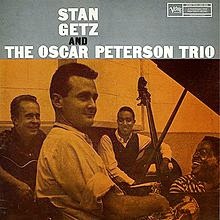
Stan Getz & Oscar Peterson "Stan Getz and the Oscar Peterson Trio"

Brian Lynch "Back Room Blues" - Lewis Nash (drums)

Art Blakey & The Jazz Messengers "Caravan" - Art Blakey (drums)

Ali Jackson Jr. "Amalgamations" - Ali Jackson Jr. (drums)

Rodney Green "Live at Small's" - Rodney Green (drums)

Duke Ellington "The Piano Sessions" - Dave Black, Sam Woodyard (drums)


- And finally, today's Last Word goes to this guy...


Monday, November 3, 2014

Carvin on Rudiments


Some more great lessons today thank to the nice folks over at the Jazz@Lincoln Center's Jazz Academy youtube.com channel. Here's the great Michael Carvin demonstrating some important drum solo concepts and....all your rudiments!


Tuesday, October 28, 2014

Oral History with Albert "Tootie" Heath


There are many great lessons and other great Jazz related things over the Jazz at Lincoln Center's Jazz Academy youtube.com page worth checking out. I really enjoyed this three part interview with the great Albert "Tootie" Heath:


Monday, October 20, 2014

Eddie Gladden with Dexter Gordon


Thanks to Bill Steiger for passing along these wonderful and BURNING clips of the underrated Eddie Gladden from a 1979 North Sea Jazz Festival featuring Dexter Gordon, Kirk Lightsey and Rufus Reid:


Monday, October 13, 2014

Bobby Sanabria LP Basics


Thanks to the kind people over at LP Percussion, here's drummer/percussionist/educator extraordinare Bobby Sanabria demonstrating several Afro-Cuban rhythms as applied to the drum set:


Monday, October 6, 2014

Guest Blog Post: Max Senitt


Today's challenging guest blog post comes from Toronto-based drummer extraordinare Max Senitt. I used to hear him play around town all the time while I was living in Toronto five, six years ago and he's also written a series of great articles on drumming for Canadian Musician Magazine.

A little about Max:

Toronto based drummer, Max Senitt, has been playing music for longer than he can remember. He started in his crib, kicking the side with a surprisingly steady pulse. By the age of seven, interest in "skillful banging" continued to escalate, and a drum set was appropriately purchased. Now with more than 30 years of drumming under his belt, Max shows no signs of slowing down. The beautiful sounds of music from all around the world continue to inspire and feed his deep thirst for musical knowledge. 

Max maintains a busy freelance career playing a wide range of musical styles with many highly acclaimed Juno and Grammy Award winning artists. 
Past and present credits include working with the likes of Alex Cuba, Gord Sheard, Hilario Duran, Carol Welsman, Zebrina, Eliana Cuevas, Gary Morgan and Panamericana, Etienne Charles, The Flying Bulgars, Canefire, Elizabeth Shepherd and Odessa Havana.

--------------------------------------------------------------------------

"The 5 stroke Roll/Venezuelan Merengue Exercise" by: Max Senitt


That’s right! Here is a fun and challenging little exercise that combines an application of the 5 stroke roll inspired by my friend, master drummer/teacher Pedro Barahona, who I met earlier this year while in Chile (you can read an article about that meeting here: http://issuu.com/drumsetc.ca/docs/drums_v26n2_web/21?e=6697883/7572137 ), and two foot ostinatos that come from a very interesting Venezuelan Folk rhythm called “Merengue”. The Venezuelan Merengue is quite different from the more popular “Merengue”, which originates from the Dominican Republic. The biggest difference between the two rhythms is the time signature. The Venezuelan Merengue in 5/8, whereas the Dominican version is in Cut Time or 4/4.

To begin, become acquainted with the first 5 hand patterns. You will notice that they are essentially just 5 stroke rolls leaving out the pause after the single hit that we are all accustomed to doing. This is the element that I learned from Pedro. You will also notice that patterns 2-5 are simply permutations of the first one, or the same pattern shifted over to have the single accented hit fall on each part of the beat. The technique of permutation is a frequently reoccurring theme in my teaching and practice, due to its completeness and challenging qualities.

Once you have a handle on the hand patterns, begin to add the feet. The basis of the Venezuelan Merengue shown in foot pattern, is quite similar to a 6/8 rhythm found in many parts of South America. This rhythm is created by adding one extra 8th note rest at the end of bar. Some of the names of the 6/8 version are: Joropo in Venezuela, Chacarera in Argentina, Cueca in Chile, and Lando in Peru. The 5/8 rhythm has been know to be called the “Drunken Six” due to its limping sensation. As you become comfortable with each hand pattern over the 2 foot ostinatos, have some fun orchestrating the accents around the drums. You can also apply buzz strokes and “diddles” to the accents.

One thing I recommend as you are researching deeper on the Venezuelan Merengue (which you will do of course!), try searching “merengue venezolano” and you will find the 5/8 goodness a lot easier! You can also find some nice Venezuelan Merengue on the latest album from pianist Edward Simon: http://sunnysidezone.com/album/venezuelan-suite


Thanks for reading this article, and if you have any further questions or would like to book a private or skype lesson with me, I can be reached though my website http://www.maxsenitt.com and also found on Facebook, Twitter, Youtube.com, and Instagram.